Showing posts with label m2. Show all posts

Saturday, 15 January 2011

Barry cawston architectural research

Barry cawston architectural research


Barry cawston is a photography that has worked with English heritage and has been working as a freelance photographer for ten years , he has won many awards and has exhibitions of hes work including hes happy sad on tube stations


I think this is interior shop of a glass 
wall in a building it has amazing 
reflections , so much its hard to work
out what is the reflection and what 
is inside the room 


This looks like a indoor shot 
it has great composition 
with all the robots 
has a good depth of Field 


This is a close up of some steps and building 
it has some great lines and shadows 
has good blue tones and shadows of the 
stair banister 


This looks like a bathroom that
has seen better days with a window in the room
you get a good reflection 
Has a good composition with the chair 
and coats hanging up


I love this indoor shot of the building 
I like the reflections in the water 
and the composition of this shot 
with the tones and textures make it 
a nice shot .


Nineth-six flats
Its a section of a flat showing many glass windows 
I love the different colour and tones of the windows 
I like this simple idea of taking a section of a building 
and showing it close up so you almost don't know what the image is
Its a good photo with great exposure and detail .


This is award winning photo 
The Tibetan cowboy 
         It won the Exerter contemporary open


Barry cawston has had exhibitions too
This is hes Barry's first major solo exhibition in the South West


Barry cawston has had many of hes work published over the years in books and magazines

In 1998 Building at risk published in the Sunday Telegraph Magazine and exhibited in the House of Commons and at the Roundhouse, London
IN 2000 Picture palaces was published in Interiors Magazine and exhibited at the Electric cinema 
IN 2002 public sculpture A book about about public sculptures in England's city's
In 2003 London proposals changing London the plan 
In 2006 street clutter , lose the signs save are street campaign
IN 2007 He highlighted the poor state of many Listed Churches Published in the Sunday Times Magazine 'Stella "
In 2008 Heritage at risk Published in the Sunday Telegraphy Magazine 
Also exhibited at Battersea 
In 2009 conservation Areas at Risk Exhibited in Kings Cross London .

Saturday, 18 December 2010

Martin parrs exhibition / Research


I visited the Public in west brom to see Martin Parr's exhibition on black country stories
with over 600 photos on view off the black country life , there was even a few architectural and close up photos in the mix so was nice to see hes work


Martin Parr

 During the last 20 years Martin Parr has become established as Britons best-know  and most successful documentary photography
His goal is to show the real side of every day life  rather than the carefully edited idealised image other photographers show


          Some strange close ups from martin Parr


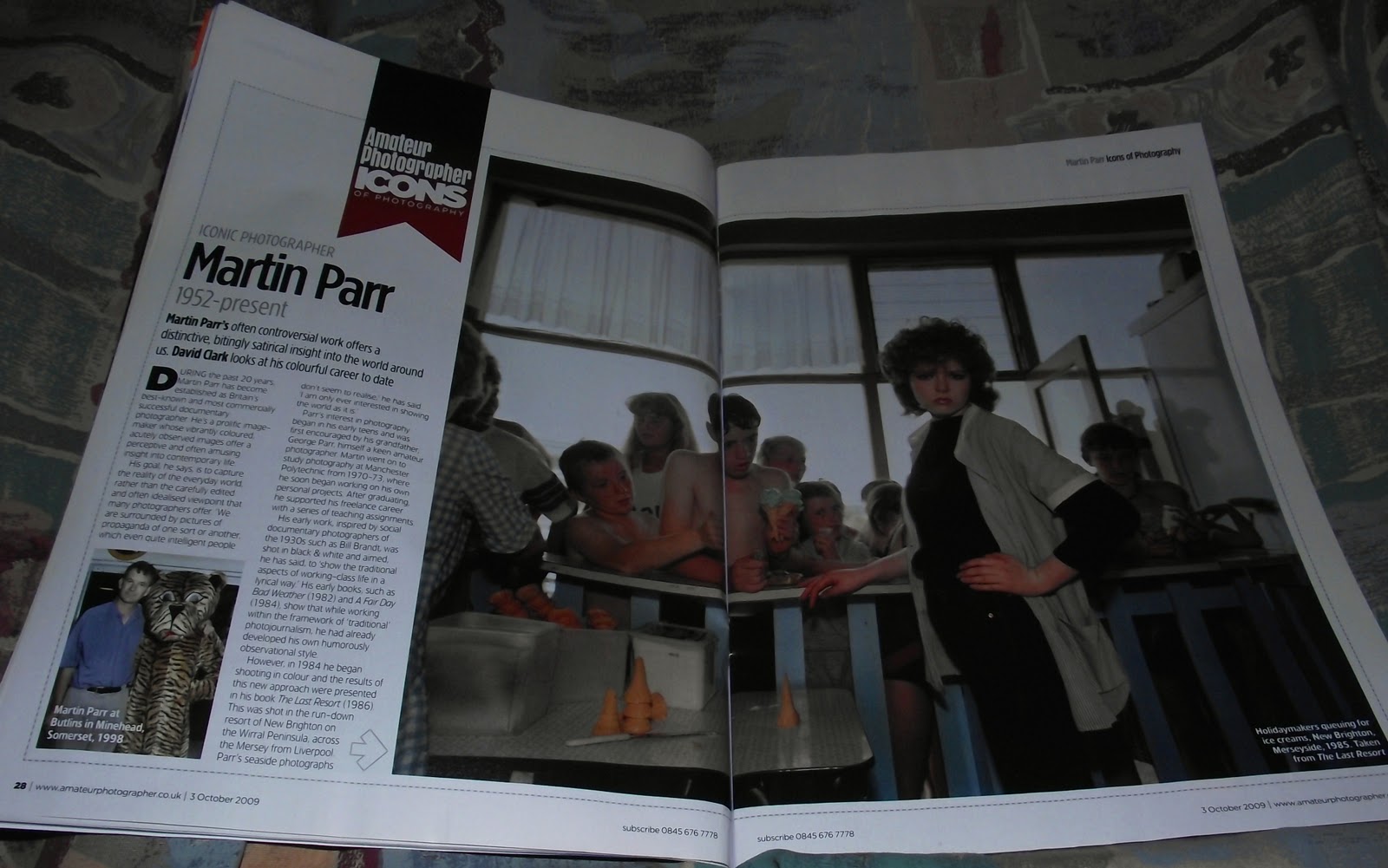
Martin Parr wanted to become a documentary photographer from the age of fourteen, and cites his grandfather, an amateur photographer, as an early influence of Art in 1970. In 1983, he began taking photographs in New Brighton, a run-down seaside resort on the Wirral outside Liverpool in England. Built as a Victorian rival to its elegant namesake in the south, by the turn of the century it had become a favorite resort for working-class families and day-trippers from towns in the industrial north west. By the time Parr got there, three New Brighton was in severe decline . Instead of the grainy black and white in which photographers had traditionally reflected Britain (particularly working-class Britain) for the past half-century, Parr took a medium-format camera, flash, and color film. It showed New Brighton and its holidaymakers in an unforgiving light. There was no safe veil of nostalgia, nothing subdued by black and white.


I found a article about Martin Parr in one of my old mags


A collection of martin Parr's work


Martin parr talking about some of hes photos at Parr world
a exhibition that was held in Gateshead at the Baltic
showing some of hes collection of books and photos
and showing a collection of hes own work .


Decisive moments

  • 1952 born In Epsom surrey
  • 1970 starts studying photography at Manchester polytechnic
  • 1975 Given a Arts council of great Britain photography Award
  • 1984 Takes up colour photography
  • 1994 Becomes a full member of magnum photos
  • 1999 Parr's book common sense signals a new direction with more focus on close up detail rather than wider scenes
  • 2004 Appointed professor of photography at the university of wales
  • 2005 Becomes a honorary fellow of the royal photographic society
  • 2008 Made a honorary doctor of arts at Manchester metropolitan university


Black country stories

Martin Parr has spent a year documenting life of people in the Black Country, exploring modern day society and its cultural make up

Martin Parr image


I took some photos of the exhibition with my mobile phone


The photographic archive of 667 photographs is currently being displayed for free at The Public until 23
January 2011


Tuesday, 14 December 2010

Joe cornish / Macro / architectural research


                                                                       Joe Cornish

Joe has twenty five years of professional photography under hes belt he was born in Devon in 1958. He is famous for hes beautiful landscape photography
which can be found in many books and magazines  .
Hes photographs are in more than thirty travel books
He has worked with the national trust for many years
contributing to many of there books .

Joe Cornish recently came to the college to give a evening talk
Regrettably i was unable unable to come to the talk because of the distance i live from the college
and the traveling by public transport

One of Joe's inspirations was the work of Ansel Adams
Adams Ansel photographer and environmentalist, was born in San Francisco, California, the son of Charles The grandson of a wealthy timber baron, Adams grew up in a house set amid the sand dunes of the Golden Gate. When Adams was only four, an aftershock of the great earthquake and fire of 1906 threw him to the ground and badly broke his nose giving him a distinctive look .

A commercial photographer for 30 years, he made visionary photos of western landscapes that were inspired by a boyhood trip to Yosemite. He won three Guggenheim grants to photograph the national parks (1944--58). Founding the f/64 group with Edward Weston  in 1932, he developed zone exposure to get maximum tonal range from black-and-white film.


                                                   Some of Ansel Adams photographs.

Joe Cornish has done some beautiful close up macro work also

   This shot of a leaf under water is beautiful showing the leaf under the water and above , great reflections and shapes make a great photo.


The crispness of the leaf and the colours are beautiful
Hes use of a wide aperture in a close up is something i have liked to use in my photography . Its makes the leaf stand out and makes you see the sharpness of leaf that he is metering onto .

Comparisons with my work

                       I have done something similar recently focusing onto the
                        first berry's and letting the rest fade into the background

450D
Lens 60mm
Shutter speed 1/80 sec
Aperture f/2.5
ISO 100
Metering Evaluative
                                       
  Joe has done architectural shots as well


This great photo has great composition using the for ground and patterns of the floor it has great leading lines and texture .


                                                    This stairway has great leading
                                                  lines with lovely tones of colours


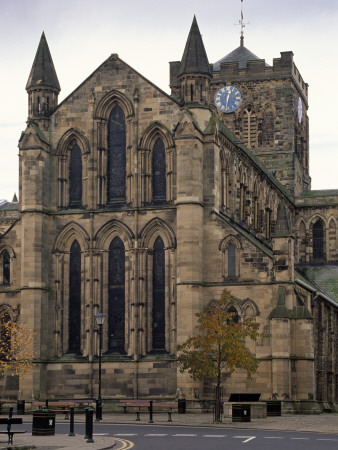
This church is a great composition showing the 
clock tower and the front of the church

Hexham Abbey, Northumberland, 1170 - 1250, Early English Style, Stone Carving
A close up of a part of the church showing the detail of the Statue

                                                         Comparisons with my work

I have done something smilier at  Lichfield  , I took a shot of Lichfeild Cathedral
and took some shots of the detail of the building
 

Lichfield Cathedral

450D
Lens 18-55mm at 18mm
Shutter speed 1/60 sec
Aperture f/7.1
ISO 100
Metering Evaluative

I have used a composition that shows the front of the cathedral

Close up of Statue on Cathedral

450D
Lens 50mm
Shutter speed 1/125 sec
Aperture f/1.8
ISO 100
Metering Evaluative

             I have used a shallow aperture and metered onto the woman I have the baby in soft focus


Joe has published many books like First light where he guides
 through the building blocks of landscape photography , with over
100 photographs included its a book any photography would love to own

Cover: First Light.


Joe Cornish has also been in many photograph magazines I found a article in a old magazine i have about Joe Cornish and Scotland : The project of a lifetime it had some beautiful photos published inside


Hes also done books for the national trust like coast 


Joe talking about how every body is a photography these days


A great joe cornish photo being displayed on a wall

Hes a link to a great video of joe cornish at work > http://vimeo.com/10832802 

Tuesday, 30 November 2010

Macro research

Macro research

I have many magazines and books and will be using them for research for my macro photography

This magazine tells you information on the technique
involved in macro photography and the different lenses and equipment that you can use to improve your shots


I have many books on photography and many have pages on close up and macro photography so they may become helpful for ideas


I have drawer fulls of magazine and many have interesting article's on macro photography
with great photos to learn from

I also have many books with sections on macro


I have over 50 books on photography and they help with research

Saturday, 13 November 2010

Karl Hugo schmolz research


6_1210659738.jpg
 

KARL HUGO SCHMOLZ

Architectural research

 Karl Hugo schmolz was born in Wessenorn Germany in 1917 , He started taking photos at the age of 15
he worked with many of the leading architects of the time , as world war two started he joined the army and had to stop.
However on his return he took to using a large-format camera to document the rebuilding of Cologne after the wartime damage.
Although primarily shooting architectural subjects, he also began to take on a much broader set of assignments, often in connection with advertising. This work was varied but photographing furniture became one of his major projects. His portfolio has therefore become a documentary of living in Germany over a thirty-year period.
Karl Schmolz married another photographer, Walde Huth and together they set up the "Schmolz + Huth studio, which also concentrated on fashion and portrait photography.

waldehuth01
Walde Huth
She studied photography at the Schule f Angewandte Kunst und Handwerk, Weimar (1940-43), and she completed her studies by training as a colour photographer with Agfa-Wolfen.

In 1945 Huth-Schmolz worked as an industrial photographer at the engineering works in Esslingen. She then worked on commissions for textile companies and leading German fashion magazines, and she was one of the first to use colour photography for these subjects. She was commissioned by the Frankfurter Illustrierte to take photographs in Paris (1954-6) and by Freundin and Elegante Welt to photograph in Florence (1956).
Huth-Schmolz set up a studio-house with her husband in Marienburg, Cologne, but suffered a long interruption in her work caused by the demands of her family. She returned to the public eye in the late 1970s with a completely new pictorial style, producing long cycles of high-quality photographs with a strong conceptual basis


 One of his last assignment undertaken by Karl Hugo Schmolz was of pictures of the new Museum Ludwig in Cologne.  he was unable to complete it, his test shots had already captured the main focal points of the building, setting the bar for the next photographer to take on the project.

Karl Schmolz died in Lahnstein in 1986.


Architectural Photographer - Rheinisch Westfalische Bank, Treppenlauf by Karl Schmolz

This photo shows some stairs in a building
It has good leading lines drawing you 
down the stairs 
The shadows in the photo improve the photo

KarlHugoSchmolz2.jpg

This shop window 
I love the leading lines and theomposition of the photo
you almost cant see the glass window as you gaze into the photo

Architectural Photographer - The Cologne Opera by Karl Schmolz

A great side on view of some buildings
lots of different shapes to look at in this photo
with lovely tonal range throughout the photo


This is a photo of a the siemens building
from across the street i like the windows
and composition your eyes are drawn to the two men
at the foreground and i think this is what makes the photo


220203.jpg


A beautiful stair case photographed 
With good ambient light coming from the large windows 
on the right the stairs have leading lines up to the ceiling 
I then notice the two light fittings and the unusual ceiling 
A truly stunning photo


A great interior shot of a theater I like the composition of this shot
showing all the empty seats great tones and textures
each seat is beautifully captured in the artificial light

Artist Karl Hugo Schmölz - Gelatin Silver Print

A amazing shot at some stairs leading all the way to the top
great leading lines all the way to the top


Mountain with a heart of glass: the Züblin administration building

This must of been one of karl hugo last photographic projects and i think hes captured
the building beautifully with the clouds in the sky to the glass windows and pattens
on the floor this is a great composition showing great detail and form.

Gottfried Boehm, German architect, was born in 1920 in Offenbach and was the architect of the zublin Züblin headquarters that karl hugo photographed

Over time Böhm advanced and refined the idea of “encapsulated urban space” until it reached a climax in the Züblin headquarters in Stuttgart (1981–85). Böhm faced two challenges – not only should he design an inexpensive administration building, he was also to rehabilitate the unpopular reinforced concrete by creating exemplary architecture.
Böhm divided the volume into two parallel office wings and to the surprise of the developer installed in the 25 meter wide interstice a generous glazed hall, which acts as a foyer and an event location. A round tower in the center housing stairs and three sets of impressively stacked galleries provide access to the two wings and link them with each other. The glazed structure seems like a transformation of Böhm’s concrete massif. Indeed, the journal Domus described the Züblin building as an “opaque mountain split by a transparent heart of glass.


A shot from further away showing leading lines towards this great building

Karl hugo is one of my favourite architectural photographers that I have researched the way he has captured architecture is stunning .  I'm sure hes photography will live on for many centuries .